Technology is supposed to make running an advisory business easier. And in many ways, it has.
But then the tsunami of tech tools came crashing down on firms like yours.
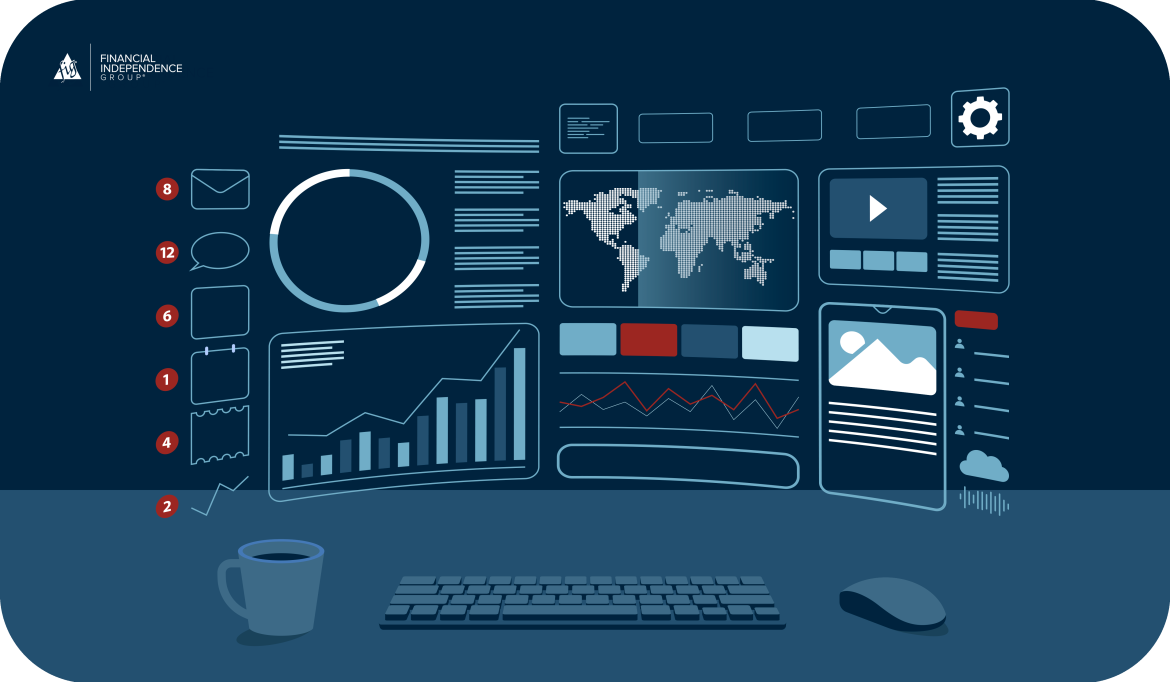
A customer relationship management system (CRM) here. An e-signature platform there. And don’t forget the marketing software, compliance tools, and planning software. Oh, and the client portals. The product platforms. Those handy reporting dashboards.
Before long, many firms found themselves managing a collection of disconnected systems that don’t always communicate with one another. The result? Chaotic inefficiency. And in a business founded on people, every extra minute spent re-entering data, searching for information, or switching between platforms is time that isn’t spent helping your clients.
As independent advisors look toward growth, the conversation around technology is changing. The question is no longer, “What tools do I need?”
It’s, “How well do my tools work together?”
The Real Cost of a Disconnected Tech Stack
What’s interesting about technological friction is that it’s not always glaringly obvious, but it shows up in many ways:
- A client update entered into one system but not another
- An application requiring information that’s already stored elsewhere
- A renewal date that falls through the cracks because it lives in a platform nobody checks regularly
On their own, these issues seem manageable, albeit manual. But then growing firms often feel the drag across the entire organization. They realize that the biggest obstacle to scalability isn’t finding new clients, but managing the operational complexity.
Every disconnected process increases the risk of errors, duplicate work, and missed opportunities. It’s why integration has become one of the most important technology trends in wealth management. It allows you to use all your tools in a seamless experience.
What Should a Modern Advisor Tech Stack Do?
Much of the technology talk focuses on features. But that’s not what move businesses forward—it’s the outcomes created by those features.
At a minimum, an advisor’s tech ecosystem should help accomplish four things:
- Create visibility across the business
- Reduce manual processes
- Support compliance requirements
- Improve the client experience
That may sound simple. But if your firms like most, your technology has been pieced together over the years as tools become available or required.
The most effective tech stacks create a connected experience where information can move naturally across workflows rather than getting trapped inside individual tools. It’s the reason why our technology approach, built around this concept, features integrated platforms, API connectivity, and a unified workflow experience.
Related: Improving Your Client Experience: A 5-Step Framework for Independent Advisors
Visibility Matters More Than Most Advisors Realize
If you were asked right now, can you answer these questions?
- Where does all pending business stand?
- Which clients need attention?
- What opportunities require follow-up?
- Are you 100% certain you’re offering the best solutions to your clients?
If finding those answers requires opening multiple different systems and an hour’s worth of research, visibility is likely a major problem. This is where consolidated business management becomes valuable.
Having policies, contracts, client information, quotes, and business insights available in a single environment creates a much clearer picture of what’s happening throughout the firm. It delivers a full, end-to-end business management environment that combines client data, life and annuity business, quoting tools, and business insights in one place.
Prioritize and Uncover Opportunities
Equally important to visibility is prioritization.
Imagine having customizable dashboards and action-oriented workflows to quickly identify upcoming reviews, renewal opportunities, and critical business activities before they become urgent problems, such as renewal dates or anniversaries. Outcomes like these are why we built the Action Center within our Platform: to highlight priorities and make it easy to act on them.
Why AI Is Becoming Part of the Conversation
Artificial intelligence (AI) can’t replace relationships. But it can reduce administrative work so you can focus on those relationships.
Imagine being able to quickly identify pending business, locate policy information, or surface relevant client data without manually searching through multiple systems. That’s where AI becomes useful, saving you and your staff time and headaches.
AI tools like FIG Intelligence are designed to help you surface client and policy insights, answer questions about their data, and locate resources within the platform more efficiently. As your firm continues to grow, the ability to access information quickly may become one of your most valuable productivity advantages.
Eliminate Bottlenecks Wherever Possible
Some of the biggest technology frustrations occur during onboarding, application submission, and compliance workflows.
The more steps involved, the more opportunities there are for something to slow down. The good news? Modern advisor tech is increasingly focused on creating a single workflow experience.
Digital onboarding tools can help streamline licensing and contracting activities. E-application solutions create a more connected process for completing business electronically. Compliance-focused tools help support suitability reviews, fiduciary responsibilities, e-applications, and document management. Finding strong solutions designed around these workflow needs is critical to manage today’s books of business.
Growth Requires Better Data Connections
Many firms still face a common problem: The same information lives in multiple places.
That’s why data connectivity has become increasingly important.
When platforms can share information through application programming interfaces (APIs) and integrations, firms spend less time updating records and more time acting on insights.
Find a technology ecosystem that emphasizes real-time connectivity through live API connections with carriers and vendors, helping reduce manual work while keeping data current across systems. The ecosystem also includes integrations designed to prefill applications and push book-of-business data to wealthtech and fintech platforms. That’s an operational advantage.
Related: Unique Value Props to Beat Mega RIAs and Robo-Advisors
Technology Should Make Business Simpler, Not More Complicated
The best advisor technology often goes unnoticed. Not because it lacks capability, but because it fits naturally into existing workflows.
A well-designed tech stack helps advisors stay organized, support clients, maintain visibility, and scale operations without adding complexity. As the industry continues moving toward unified platforms, integrated wealth management experiences, and connected data ecosystems, firms that prioritize simplicity may find themselves with a significant competitive advantage. FIG’s technology philosophy emphasizes a connected experience built around accessibility, innovation, and efficiency.
Is Your Tech Stack Helping You Scale?
An integrated technology suite brings together business management, AI-powered insights, onboarding, e-applications, compliance support, marketing analytics, and data integrations to help financial professionals spend less time managing systems and more time serving clients.
Ready to see what a more connected advisor experience can look like?
Connect with us to explore the FIG Tech Stack and discover how integrated technology can help simplify operations, support growth, and create efficiency across your business.